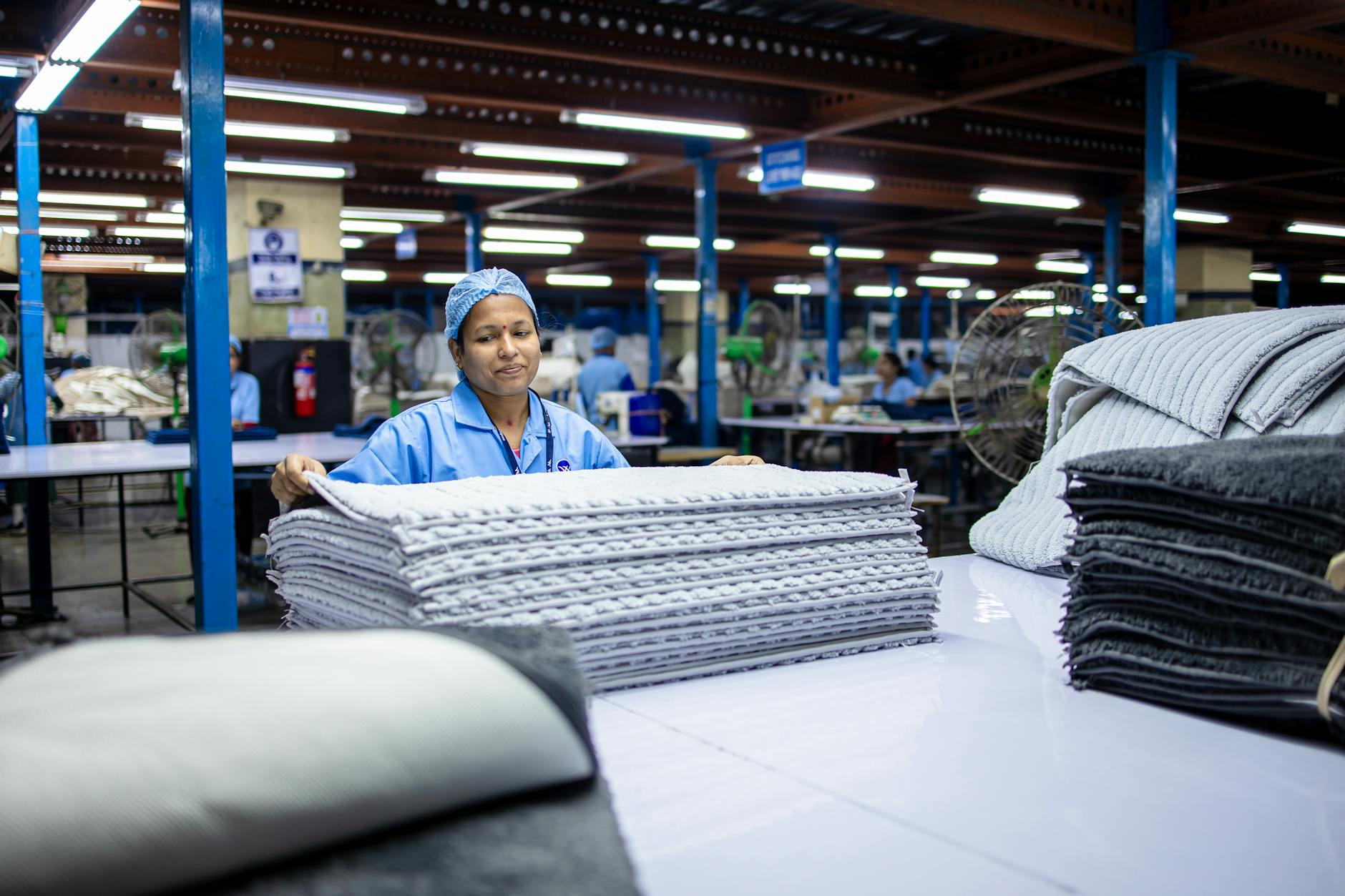
It's not laziness. It's not bad management. Display manufacturers consistently mismanage labor for one structural reason: every tool they have was built for a different kind of factory.
The Wrong Mental Model
Most workforce management thinking comes from repetitive manufacturing. Same SKU, same line setup, week after week. You staff to a baseline, track units per hour, and the numbers are stable enough to actually mean something.
Display manufacturing doesn't work that way.
PDQ trays for a Q3 snack promo. Pallet displays for a holiday club store program. A shipper display redesigned two weeks before launch. Each one is a different build — different assembly sequence, different components, different crew size.
And because every program is custom, labor never stabilizes. It's the single biggest cost in the business — often 70% of total operating cost — and it swings wildly from month to month.
Tools built for repetitive manufacturing assume a stability that simply doesn't exist here.
The Temp Staffing Trap
Because volume is unpredictable, almost every display manufacturer leans heavily on temp agencies. That's the right call. The problem is what happens next.
Workers come from multiple agencies. Hours get billed in bulk, weekly. There's no clean line between clocked-in hours and productive hours — because nobody built a system to track that distinction in this environment.
When an assembly line slows mid-shift — a component delay, a spec change from the brand, a bottleneck at kitting — that idle time gets billed anyway. Not because anyone's being dishonest. Because there's no output tracking telling you production dropped on that line 40 minutes ago.
By the time the invoice comes in, it's approved. By the time you reconcile it against what actually shipped, the program is over.
The Visibility Gap
Here's what most display manufacturers are actually working with: a spreadsheet, a staffing agency portal, and a floor manager with a walkie-talkie.
None of those talk to each other. None of them tell you — in real time — what your labor cost per unit is on the current run, which assembly lines are producing and which are sitting idle, or whether last week's agency invoice actually matches what shipped.
When 70% of your cost is labor and you have zero real-time visibility into it, decisions get made on gut feel and last quarter's numbers. Staffing levels stay too high after a spike because nobody wants to cut too early. Agencies get approved because the relationship is good, not because the invoices check out.
This isn't negligence. It's the natural result of applying 1990s management infrastructure to a business running on weekly promo changes and custom builds.
What Actually Needs to Change
Three things.
Piece count tracking at the assembly line level, updated in real time. Not a report you pull at end of shift — a live number your floor manager can see the moment output drops. When a line slows down, you know immediately, not three days later on an invoice.
Automated 3-way match reconciliation. Every billing variance flagged before approval, with a full audit trail. No more manual comparisons, no more rubber-stamping invoices because you don't have time to dispute them.
Floor-level displays your managers can actually use during a production run. Airport-style visibility into who's where, what's running, and where you're short — on the assembly floor, in real time, not in a back-office report nobody reads until the program's done.
Display manufacturers who've closed this gap aren't doing anything exotic. They're just seeing what's happening on their assembly lines in real time, during the programs where 70% of their costs are actually accumulating. Most find the savings within the first quarter.
That's the whole fix.
About the Author
Elements Connect
Elements Connect is a workforce intelligence platform helping beauty contract manufacturers, 3PLs, and staffing agencies transform disconnected labor data into actionable insights that reduce costs and elevate operational performance.
Learn more at elementsconnect.com → (opens in a new tab)Related Posts

How Staffing Agencies Can Build a Proprietary Talent Quality Score Clients Can't Get Anywhere Else
Most staffing agencies compete on price and speed—but neither creates lasting client loyalty. A proprietary Talent Quality Score built from real performance data changes the conversation entirely. Here's the step-by-step framework for building one your clients can't find anywhere else.
10 min read
Your Best Operators Are Carrying Your Worst Ones: How to Use Per-Worker Performance Data to Fix Line Imbalance
When your fastest operators compensate for your slowest ones, line imbalance becomes invisible—until it shows up in your labor cost per unit. This guide shows plant managers and operations leaders how to use per-worker performance data to surface hidden imbalance, reassign talent strategically, and build a continuous improvement culture that scales.
15 min read
The Display Assembly Problem: Why Labor Is the Hardest Thing to Manage in Display Manufacturing
Every Costco endcap you've ever seen was built by hand. Display manufacturing runs on promo chaos, temp labor, and zero real-time visibility into the single biggest cost in the business.
4 min read