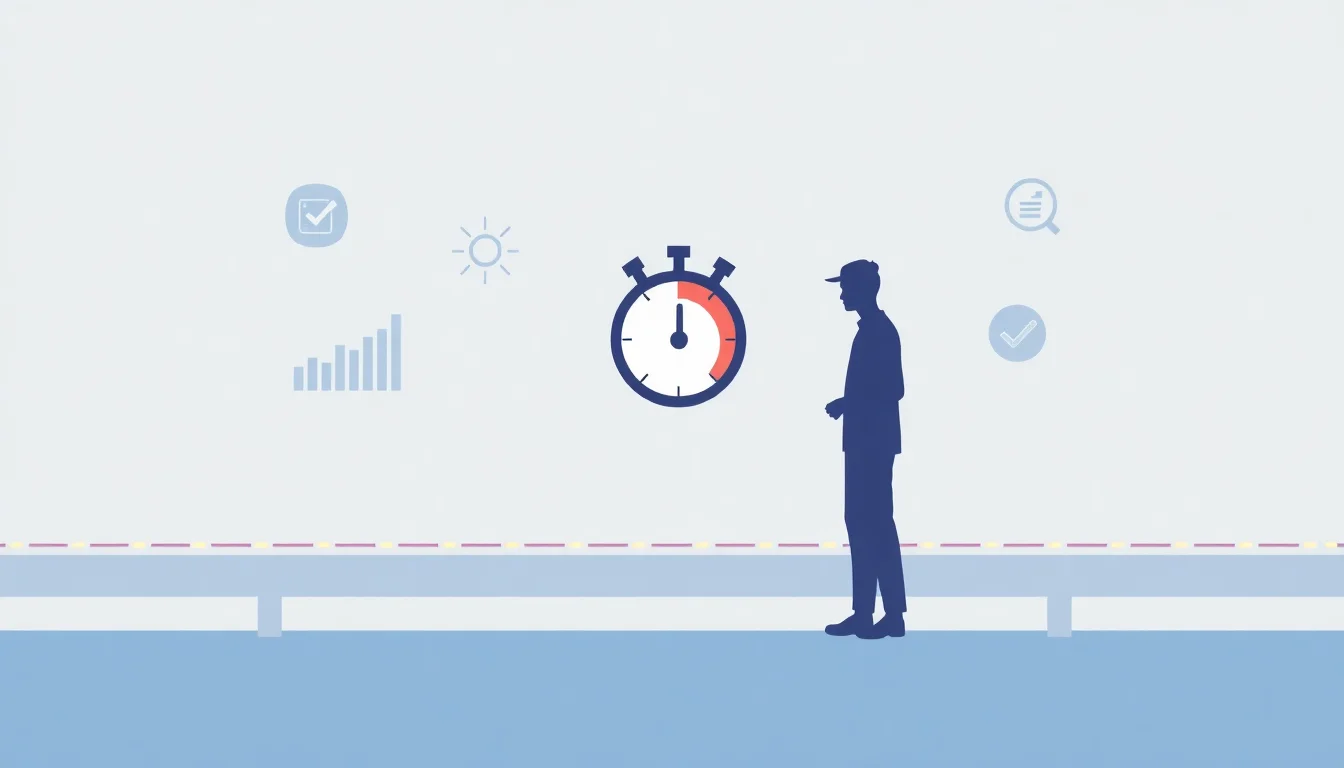
To measure QA impact, track QA-attributed stop events in your MES, log decision-cycle times per inspector, and cross-reference rejection rates against shift and personnel data. Most facilities find the problem is workflow design and visibility, not people.
Why QA-Related Downtime Is Systematically Underreported
Most plant managers are working with incomplete data. Their MES tracks machine faults, material shortages, and planned maintenance. What it almost never captures is the QA hold that stopped the line for 23 minutes while a supervisor was tracked down for sign-off. That stop gets absorbed into "idle time" or "miscellaneous," and the real cause disappears.
This is not a minor data hygiene problem. At a facility running two shifts, six days a week, that is a meaningful chunk of capacity that looks, on paper, like a production inefficiency rather than a workforce intelligence gap. At Elements Connect, we have helped manufacturers quantify this hidden capacity loss and recover it through better QA visibility and staffing coordination. Our approach focuses on translating absorbed QA time into actionable staffing and workflow improvements that facilities can implement immediately.
Industry-wide estimates suggest facilities experience hundreds of unplanned downtime hours annually, yet the category breakdowns rarely isolate QA holds from maintenance stops or material shortages. That aggregation is exactly the problem. When QA downtime hides inside a broader "unplanned stops" bucket, no one owns it, no one fixes it, and it compounds every quarter.
Quality issues contribute to unplanned stops alongside maintenance and resourcing factors, but they behave differently. A machine fault has a repair time. A QA hold has a decision time, which is determined by people, not parts. That distinction matters enormously for how you diagnose and reduce it.
The Hidden Cost of 'Absorbed' QA Time
Absorbed time is stop time that operators and line leads write off as unavoidable, creating false baselines. In beauty contract manufacturing, where batch changeovers are frequent, QA holds during transitions are rarely flagged separately. They get lumped in with the changeover time itself, making both the QA issue and the changeover performance invisible.
Consider a mid-size contract manufacturer running 12 SKU changeovers per week. If each changeover includes an untracked QA hold averaging 18 minutes, that is over 3.5 hours of attributed QA downtime per week that never appears in any report. The line lead calls it "normal." The plant manager never sees it. The problem compounds.
How Disconnected Systems Create the Blind Spot
QA data lives in a LIMS or a spreadsheet. Production data lives in the MES. Labor data lives in an ATS or ERP. None of them talk to each other. Without a unified workforce intelligence layer, correlating a QA inspector's decision speed to line output is nearly impossible, even for experienced operations teams with good instincts.
Staffing agencies providing QA labor rarely share individual performance data with clients, which compounds the visibility gap further. You know you have temp QA workers.
The Four Primary Ways QA Teams Create Line Stoppages
Understanding the mechanism of QA-caused downtime is the first step toward measuring it accurately. There are four primary patterns, and they have different root causes and different fixes.
Inspection hold queues occur when a line requires sign-off from a credentialed inspector who is not physically present at the checkpoint. The line stops. The inspector is paged. Ten minutes pass. The downstream schedule shifts.
Rework loops are triggered when failed inspections send product back upstream. Defects trigger holds, rework, or stop-ship alerts that can lead to batch rejections or full line halts. The labor cost is paid twice, once for the original production run and once for the rework cycle, while downstream scheduling absorbs the disruption silently.
Rejection escalation lag happens when escalation protocols are unclear. A decision that should take two minutes takes twenty because no one has defined who has authority to approve a borderline pass. The entire line waits.
Understaffing at checkpoints is the most predictable bottleneck. When QA headcount does not match production volume or line speed, the math guarantees delays. This is structural, not random.
Rework Loops vs. Rejection Escalations: Different Costs, Different Fixes
Rework loops are a quality system design problem. The fix is clearer upstream standards, better inspector training on product-specific defect criteria, and tighter handoffs between production and QA at the start of each run. Rejection escalations are a workflow and authority problem. The fix is a defined decision tree with named approval levels and real-time supervisor visibility.
Mixing the two in your downtime reporting leads to misdiagnosis. A plant manager who invests in inspector training to solve an escalation authority problem will see no improvement and will likely conclude that "training doesn't work here."
Quality issues escalate costs in sectors with high batch values, strict regulatory requirements, or short shelf lives. In food and beverage, a stop-ship decision on a single batch can trigger recall-level costs. In beauty contract manufacturing, a formulation failure during a high-volume run means not just rework labor but wasted raw materials and a missed ship date. The cost of a 20-minute QA hold is not 20 minutes of labor. It is 20 minutes multiplied by the full cost of every idle resource downstream.
How Temp Labor Quality Amplifies Every QA Bottleneck
Contract and temp labor quality inspectors often lack product-specific training, which increases their average hold and decision time. High turnover in QA roles means institutional knowledge about common defect patterns is constantly being rebuilt from scratch, shift after shift. This matters. A lot.
Without individual-level performance tracking, plant managers cannot identify which temp QA workers are generating disproportionate downtime. At Elements Connect, we have found that individual-level inspector tracking consistently reveals a small number of workers responsible for an outsized share of escalation events, a distribution that is invisible without personnel-linked stop event data. We recommend starting with personnel-linked stop event data as your first measurement priority, as it typically surfaces the highest-impact improvement opportunities within the first two weeks of implementation. The result is that poor performers stay on the line indefinitely because there is no data to surface the pattern. At Elements Connect, we have found that individual-level inspector tracking consistently reveals a small number of workers responsible for an outsized share of escalation events, a distribution that is invisible without personnel-linked stop event data.
How to Measure QA Team Downtime Impact: A Step-by-Step Framework
Measurement is where most facilities stall. Here is a practical, sequential framework that does not require a data science team.
Step 1: Define your downtime taxonomy. Create a specific QA-attributed stop code in your MES or production tracking system. Without a dedicated code, QA stops will continue to hide in generic categories. This single change often produces immediate revelations.
Step 2: Capture decision cycle time per inspection event. Total hold duration includes wait time, inspection time, and decision time. Separating these three components isolates whether the problem is process lag (inspection takes too long) or personnel lag (a specific inspector or escalation path is slow).
Step 3: Link every QA stop event to a specific inspector, shift, and line. Personnel-level attribution is what separates a workforce intelligence analysis from a generic downtime report. This enables you to ask: Is this a systemic problem or a personnel pattern?
Step 4: Track first-pass yield by inspector and shift. First-pass yield is the percentage of product that passes QA on the first inspection attempt. Variation in this metric across inspectors on the same product line is a direct signal of inconsistent pass/fail application, which generates rework spikes that look random but are not.
Step 5: Calculate QA downtime as a percentage of total available production time. Do this per week, per line, and per facility. The formula: QA Downtime % = (Total QA-attributed stop minutes divided by total scheduled production minutes) multiplied by 100.
Step 6: Benchmark against prior periods. Without a baseline, you cannot set targets or measure progress. Even two weeks of clean data is a starting point.
Step 7: Convert downtime minutes into dollar impact. QA Labor Cost Impact = QA Downtime % multiplied by total direct labor cost for the period. Add rework cost (rework units multiplied by labor cost per unit plus material waste per unit) for a complete picture.
The QA Downtime Measurement Formula
These three calculations together give you a defensible cost case for QA process investment:
- QA Downtime % = (Total QA-attributed stop minutes / Total scheduled production minutes) x 100
- QA Labor Cost Impact = QA Downtime % x Total direct labor cost for the period
- Rework Cost = Rework units x (labor cost per unit + material waste per unit)
Presenting all three to a CFO or VP of Operations moves the conversation from "we have a QA problem" to "our QA workflow cost us $X last quarter and here is the fix."
What Good Data Infrastructure Looks Like for This Analysis
Real-time stop event logging with QA-specific codes should be triggered at the line, not entered hours later by a shift supervisor working from memory. Inspector-level time-stamping should be tied to a workforce intelligence platform, not just a timesheet system. Integration between MES stop data, QA inspection records, and labor scheduling data enables the cross-dimensional analysis that reveals true patterns.
Tuning QA inspection frequencies based on historical trend data is one of the highest-leverage adjustments a plant manager can make. When you know which SKUs, lines, and time-of-shift windows generate the most holds, you can front-load QA coverage there and reduce check intervals elsewhere. That optimization reduces stops without reducing quality oversight.
Reducing QA-Caused Downtime Without Lowering Quality Standards
Reducing downtime does not mean reducing rigor. The goal is eliminating waste in the QA process, not shortcuts in the quality standard itself.
Standardize inspector decision authority. Define which defect types can be resolved at the line versus which require escalation. This single change eliminates the longest and most disruptive QA stops. Predictive QA analytics and decision standardization approaches have shown meaningful defect reductions in structured programs, with some operations reporting substantially fewer defects and associated cost reductions through systematic QA workflow improvements.
Right-size QA staffing to production volume. Use real workforce data, not last quarter's headcount averages. A facility running variable demand in beauty contract manufacturing needs a QA staffing model that flexes with production volume, not one built for average throughput.
Implement pre-shift quality briefings tied to batch-specific defect history. If a particular formulation has a known tendency to fail a specific check during the first 30 minutes of a run, every inspector on that line should know before the run starts. This reduces early-run rejection rates and the rework loops that follow.
Apply root cause review to recurring rework loops. The 80/20 rule holds here: in most facilities, a small fraction of defect types drives the majority of rework volume. Kaizen continuous improvement methodology applied to QA rework loops produces durable reductions, not one-time fixes. Tracking and structured preventive approaches to recurring quality problems have delivered substantial downtime reductions in documented continuous improvement programs.
Automated controls and digital checkpoints can eliminate micro-stoppages that human workflows miss. When a digital system flags a parameter drift before it becomes a defect, the line does not stop. Prevention is faster than detection, and detection is faster than rework.
Building a Continuous Improvement Culture Around QA Performance Data
Share QA downtime metrics with line leads and inspectors weekly. Visibility drives accountability without creating a punitive culture, but only if the data is framed as a system problem first and a personnel issue second. Most QA downtime is rooted in workflow design, not individual failure.
Tie QA performance KPIs to staffing agency SLAs. Temp labor quality becomes a contractual expectation rather than a hope when you have the data to back it up. Agencies that can access performance data and demonstrate their inspectors' first-pass yield rates and decision cycle times are far better positioned to retain clients and justify rate discussions.
What Workforce Intelligence Platforms Reveal That MES and ERP Systems Miss
MES tracks machine and line states. Workforce intelligence tracks the human decisions and delays happening between those states. ERP manages labor costs at an aggregate level. Workforce intelligence breaks cost down to the shift, line, inspector, and event level. That granularity is where QA downtime actually hides.
The gap between these systems contains the escalation chains, the decision lags, and the staffing mismatches that no existing system surfaces on its own. A workforce intelligence platform connects stop event data, inspector performance data, and scheduling data into a single operational view, enabling QA downtime analysis that was previously impossible without a dedicated data engineering team.
For staffing agencies, this same data becomes hard performance evidence. Demonstrating that your placed inspectors have a measurable first-pass yield advantage and shorter decision cycle times is a differentiation argument that no competitor without workforce intelligence data can make.
Overcoming the 'We Already Track This in Our ERP' Objection
ERP labor data tells you what labor cost. It does not tell you what labor accomplished or where it stalled production. The ROI case for workforce intelligence closes when you calculate the per-unit cost of QA downtime that your ERP has never been able to attribute. That number, once visible, is rarely small.
Implementation does not require replacing existing systems. A workforce intelligence layer integrates on top of MES and ERP data to fill the gaps, not replace the infrastructure your team already depends on. The implementation question is not "can we afford this?" It is "how much are we losing per quarter without it?"
Frequently Asked Questions
What is a normal or acceptable QA downtime percentage on a production line?
How do I calculate the dollar cost of QA-related downtime per unit produced?
Can workforce intelligence tools integrate with existing MES or ERP systems without a full implementation?
How do I know if my QA downtime problem is a process issue versus a staffing or personnel issue?
What metrics should I use to evaluate QA inspector performance at the individual level?
How does temp and contract labor quality affect QA downtime differently than full-time inspector performance?
What is Overall Labor Effectiveness (OLE) and how does QA downtime factor into it?
How can staffing agencies use QA performance data to improve client retention and prove talent ROI?
About the Author
Elements Connect
Elements Connect is a workforce intelligence platform helping beauty contract manufacturers, 3PLs, and staffing agencies transform disconnected labor data into actionable insights that reduce costs and elevate operational performance.
Learn more at elementsconnect.com → (opens in a new tab)Related Posts

How Staffing Agencies Can Build a Proprietary Talent Quality Score Clients Can't Get Anywhere Else
Most staffing agencies compete on price and speed—but neither creates lasting client loyalty. A proprietary Talent Quality Score built from real performance data changes the conversation entirely. Here's the step-by-step framework for building one your clients can't find anywhere else.
10 min read
Your Best Operators Are Carrying Your Worst Ones: How to Use Per-Worker Performance Data to Fix Line Imbalance
When your fastest operators compensate for your slowest ones, line imbalance becomes invisible—until it shows up in your labor cost per unit. This guide shows plant managers and operations leaders how to use per-worker performance data to surface hidden imbalance, reassign talent strategically, and build a continuous improvement culture that scales.
15 min read
Why Display Manufacturers Keep Getting Labor Wrong (It's Not What You Think)
Display manufacturers consistently mismanage labor for one structural reason: every tool they have was built for a different kind of factory.
4 min read