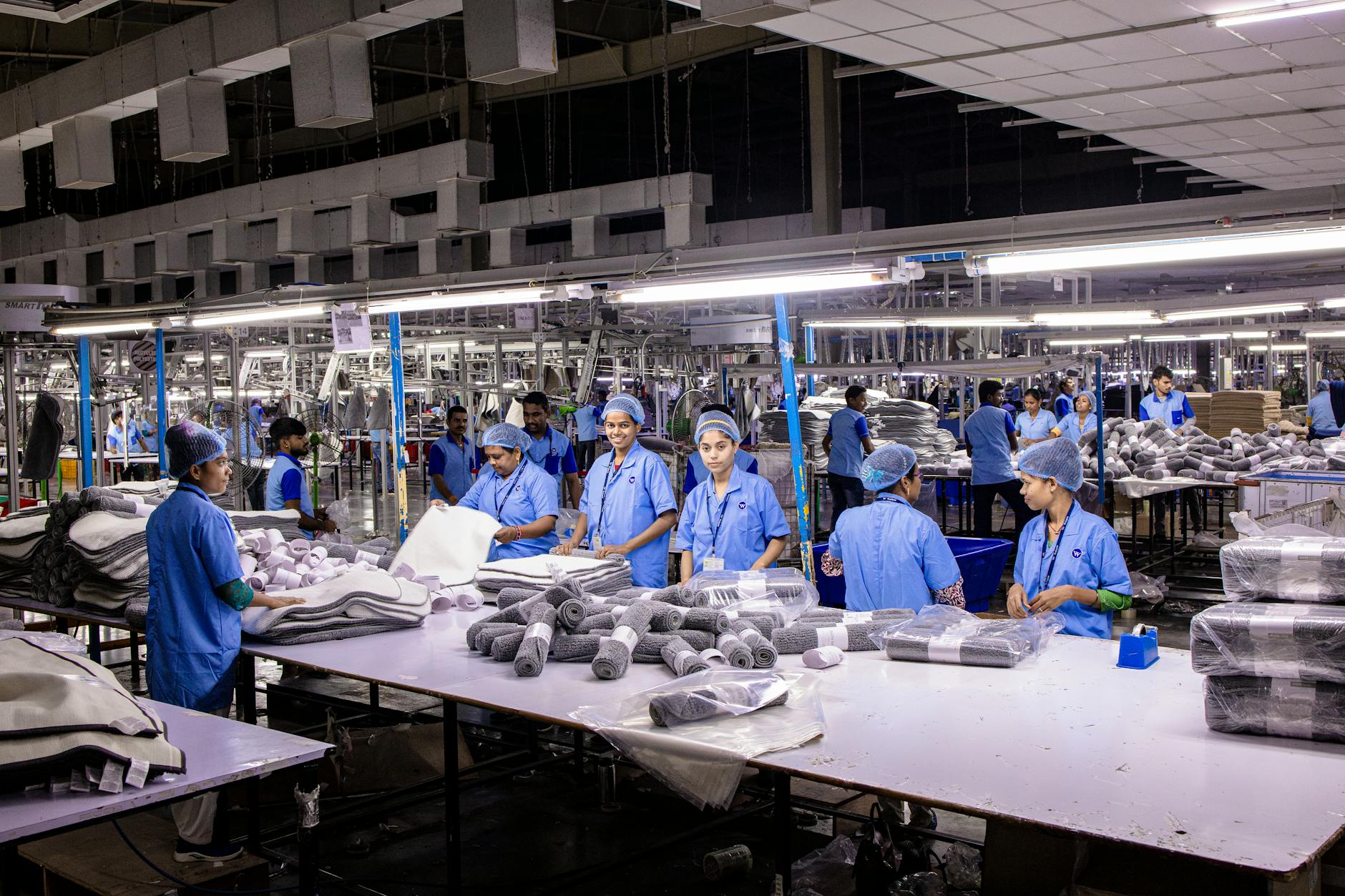
A 10% temp turnover rate in beauty contract manufacturing typically costs $1,50 (labormax.net)0–$4,000 per lost worker when you factor in recruitment, onboarding, productivity loss, and quality errors. Across a 200-person temp workforce, that translates to $300,000–$800,000 in annual hidden costs, most of which never appear in a standard labor report (navigatewell.com).
How to Calculate the True Cost of Temp Turnover in Beauty Contract Manufacturing
Most plant managers build their turnover cost estimate around one number: the staffing agency replacement fee. That instinct is wrong. The fee is the smallest part of the problem.
A complete turnover cost model has two layers. Direct costs include agency fees, background checks, drug screening, orientation administration, and the 3–6 hours of supervisory time consumed per new intake. Indirect costs include the productivity gap during ramp-up, line slowdowns that drag OEE and OLE metrics, quality error spikes, and scrap and rework that accumulate before a new temp finds their footing.
Here's the math most operations teams skip. Each replacement triggers that full cost cycle. The tragedy is that most of those losses are invisible in the ERP.
Research on manufacturing employee value puts this in sharper relief. Experienced employees can generate value worth multiples of their salary when you account for output quality, line speed, tribal knowledge, and mentoring of newer workers. When that worker walks out, you lose more than a pair of hands. You lose compounded operational intelligence.
Direct Costs: Recruiting, Onboarding, and Agency Fees
Staffing agency markups for temp placements in light industrial settings run well above base wage. Every replacement cycle compounds this cost. Hard-dollar items per new hire include background verification, drug screening, and facility orientation sessions. None of these are discretionary in a GMP-regulated beauty facility.
One useful benchmark: if a manufacturer spends $50,000 on hiring across 50 employees, the cost-per-hire works out to $1,000 per person (labormax.net). That figure covers only direct recruiting spend. It excludes the supervisory drain, the training hours, and every downstream cost that follows the new worker onto the line.
Indirect Costs: Productivity Loss, Line Slowdowns, and Quality Errors
New temp workers in manufacturing typically need 6–8 weeks to reach full productivity. In beauty contract manufacturing, that timeline stretches further because of GMP compliance requirements, multi-step SOPs, and high SKU complexity. A new worker filling a serum line is not interchangeable with a new worker running a mascara filling station. Each role has its own ramp curve.
During that ramp-up window, workers operate well below full output capacity. The productivity drag ripples across the entire shift. Line slowdowns caused by under-skilled workers reduce throughput for every experienced operator on the same line. This is the team degradation effect that most turnover models ignore entirely. A single undertrained temp can slow problem-solving response, reduce line speed, and force senior operators to split their attention between their own work and informal mentoring.
Quality error rates compound the problem. Operations with high contract labor churn show rework rates meaningfully higher than stable, experienced teams. In beauty manufacturing, rework is not just a cost line. It is a compliance event. A misapplied label or a contaminated fill run creates audit exposure, not just scrap.
Workforce analytics implementations have demonstrated how dramatically labor data visibility changes these outcomes. For example, organizations using workforce analytics software reduced overtime by 72% (timeforge.com) and 68% (timeforge.com) respectively in documented cases. Overtime is often a proxy for workforce instability. When turnover is high, remaining workers absorb extra hours. The cost compounds.
Why Beauty Contract Manufacturing Amplifies Temp Turnover Costs
Not all manufacturing turnover is equal. Beauty contract manufacturing sits at the high-stakes end of the cost spectrum for three reasons: compliance requirements, seasonal demand compression, and client relationship fragility.
GMP-regulated facilities cannot skip onboarding. Every new temp must complete compliance training before touching production. This is non-negotiable. It is also non-recoverable time. The ramp-up clock doesn't start at day one. It starts after compliance training clears.
The Compliance Cost Layer: GMP Training and Certification Cycles
GMP certification for an organization can take between three and 12 months depending on the complexity of existing processes (ag5.com). For individual workers in a GMP-regulated beauty facility, role-specific GMP compliance training adds days to onboarding before any production work begins. Multiply that by 20 replacement cycles per year on a 200-person temp workforce and the compliance cost alone becomes a meaningful budget line.
High turnover also creates audit risk. When workforce documentation shows repeated training cycles, incomplete records, or gaps between training completion and production floor assignment, FDA and retailer auditors take notice. The cost of a warning letter or a failed audit dwarfs any single year's turnover bill.
Client and Account Risk: The Cost Beyond the Facility Floor
Beauty brand clients increasingly embed quality and compliance KPIs directly into contract manufacturing agreements. A turnover-related quality failure is not just an internal operations problem. It is a contractual event.
Contract renewals hinge on consistent performance data. Turnover undermines operational credibility at exactly the moment it matters most: during the annual review cycle. A single product recall or FDA action linked to workforce instability can cost multiples of the entire annual turnover budget. That is the number operations leaders need to internalize.
Seasonal demand spikes make this worse. Holiday launches and new product introductions compress onboarding timelines precisely when quality standards are most visible to brand clients. There is no slower-production buffer period to absorb ramp-up errors during Q4.
The Workforce Data Blind Spot That Makes Turnover Costs Invisible
Here is the core problem. The data exists. Shift output records, quality hold logs, scrap tallies, attendance patterns: all of it is generated on the production floor every day. But it sits in disconnected systems that were never designed to answer a workforce performance question.
ERP systems track materials, orders, and financials. MES platforms optimize machine and process data. Neither was built to track individual worker performance at the line or shift level. Labor is treated as a fixed input, not a measurable variable. This is where turnover cost hides.
Why ERP and MES Systems Miss the Workforce Variable
The gap between machine-level data and human performance data is exactly where workforce intelligence platforms operate. It cannot tell you that Line 3 had three new temps onboarding simultaneously, that one of them triggered a quality hold, or that the experienced lead was pulled to cover their errors instead of running her own station.
Without that context, operations leaders make decisions based on incomplete information. They see the throughput number. They don't see the cause.
Staffing Agency Data Gaps That Compound the Problem
Staffing agencies typically provide headcount and hours billed. That's it. They don't provide performance quality scores, reliability benchmarks, or productivity trajectories by worker or placement. Without that data flowing back from the plant floor, agencies cannot identify which workers to prioritize for redeployment or retention.
The feedback vacuum perpetuates low-quality placements. Agencies send available workers. Plants accept them. Performance data stays on the floor, unshared. The cycle repeats. At Elements Connect, we built our platform specifically to close this loop, connecting labor performance data across staffing partners, production systems, and finance so every party can see the workforce variable clearly.
Actionable Steps to Measure and Reduce Temp Turnover Cost Impact
Measuring turnover cost accurately is the prerequisite for reducing it. Here is a practical sequence for beauty contract manufacturing operations teams.
Step 1: Build a turnover cost model using actual facility data. Pull shift-level output records for periods immediately following a new temp hire. Compare throughput per worker against your fully-ramped baseline. The gap is your productivity ramp-up cost per hire. Layer in scrap rates, rework hours, and quality holds that correlate with new-hire periods.
Step 2: Segment by line, shift, and staffing partner. Not all turnover costs the same. A filling line replacement costs differently than a kitting station replacement. Segmentation reveals where your highest-cost turnover is concentrated so you can target interventions precisely.
Step 3: Establish individual worker performance baselines during onboarding. This quantifies the ramp-up curve in real terms and gives you a defensible cost figure per replacement cycle. It also creates the foundation for predictive retention.
Step 4: Share performance data with staffing partners. Accountability requires data. When you can show an agency which of their placements are performing below baseline and which are thriving, you create the conditions for better placement quality and genuine partnership.
Step 5: Implement leading indicators. Attendance patterns, quality error frequency, and output per worker shift are observable before a resignation. These signals predict turnover before it happens.
Building a Turnover Cost Model for Your Facility
Consider a concrete scenario. A beauty contract manufacturer running a 150 (labormax.net)-person temp workforce at a personal care filling facility has a 10% annual turnover rate, meaning 15 replacement cycles per year. Assume a fully ramped worker produces 95 units per hour on a lotion filling line and a new temp produces 65 units per hour during their first four weeks. The productivity gap per replacement cycle, across four weeks, is 1,200 units of lost output per worker. Multiply by 15 cycles. Add quality-related rework and supervisory drag. The number becomes real fast.
Using Workforce Intelligence to Predict and Prevent Turnover
Real-time visibility into temp workforce performance enables early identification of disengagement signals. Connecting attendance, output, and quality data to individual worker profiles creates a predictive retention signal that no manual spreadsheet can replicate. Platforms that integrate with existing MES and ERP systems avoid rip-and-replace disruption, which is the primary reason analytics adoption fails on the manufacturing floor.
What a 25% Reduction in Temp Turnover Is Worth to a Beauty Contract Manufacturer
The ROI case is straightforward once you have a real cost model. Direct cost savings alone are material. Indirect savings compound them.
Translating Turnover Reduction Into Labor Cost Per Unit Improvement
Lower turnover means fewer hours lost to onboarding and productivity ramp. That reduction flows directly into labor cost per unit, one of the most visible metrics in contract manufacturing client relationships. Consistent, experienced temp workforces drive line speed and quality consistency. Both enable tighter cost targets on client bids and stronger positioning at contract renewal.
The revenue contribution argument runs the other direction too. Experienced workers who stay generate disproportionate value relative to their cost. They troubleshoot faster, mentor new workers, and reduce supervisory burden. That compounded contribution is what turnover destroys, one replacement cycle at a time.
Overall Labor Effectiveness gains from workforce analytics implementation are well-documented. When turnover-driven productivity loss is eliminated or reduced, OLE metrics improve across every production run. That improvement is attributable, reportable, and client-facing. Results speak louder.
The data is clear. Workforce intelligence investment becomes self-funding when turnover cost reduction is accurately attributed. The question is not whether to measure it. The question is how much longer you can afford not to.
Frequently Asked Questions
What is the average cost to replace a temp worker in beauty contract manufacturing?
How does a 10% temp turnover rate affect Overall Labor Effectiveness (OLE) in contract manufacturing?
What data do I need to calculate the true cost of temp turnover at my facility?
How can staffing agencies help reduce turnover cost in beauty contract manufacturing?
What is workforce intelligence and how does it differ from ERP or MES labor tracking?
How long does it take a new temp worker to reach full productivity in a GMP beauty manufacturing environment?
Can workforce intelligence platforms integrate with existing ERP and MES systems without disrupting production?
What leading indicators predict temp worker turnover before it happens on the production floor?
Sources & References
- 9 Powerful employee retention strategies for 2025 and beyond (opens in a new tab)[industry]
- Good Manufacturing Practice (GMP) guide for organizations | AG5 (opens in a new tab)[industry]
- Exploring The ROI Of Workforce Analytics Software - TimeForge (opens in a new tab)[industry]
- The ROI of Partnering with a Manufacturing Staffing Agency - LaborMAX (opens in a new tab)[industry]
About the Author
Elements Connect
Elements Connect is a workforce intelligence platform helping beauty contract manufacturers, 3PLs, and staffing agencies transform disconnected labor data into actionable insights that reduce costs and elevate operational performance.
Learn more at elementsconnect.com → (opens in a new tab)Related Posts

How Staffing Agencies Can Build a Proprietary Talent Quality Score Clients Can't Get Anywhere Else
Most staffing agencies compete on price and speed—but neither creates lasting client loyalty. A proprietary Talent Quality Score built from real performance data changes the conversation entirely. Here's the step-by-step framework for building one your clients can't find anywhere else.
10 min read
Your Best Operators Are Carrying Your Worst Ones: How to Use Per-Worker Performance Data to Fix Line Imbalance
When your fastest operators compensate for your slowest ones, line imbalance becomes invisible—until it shows up in your labor cost per unit. This guide shows plant managers and operations leaders how to use per-worker performance data to surface hidden imbalance, reassign talent strategically, and build a continuous improvement culture that scales.
15 min read
Why Display Manufacturers Keep Getting Labor Wrong (It's Not What You Think)
Display manufacturers consistently mismanage labor for one structural reason: every tool they have was built for a different kind of factory.
4 min read