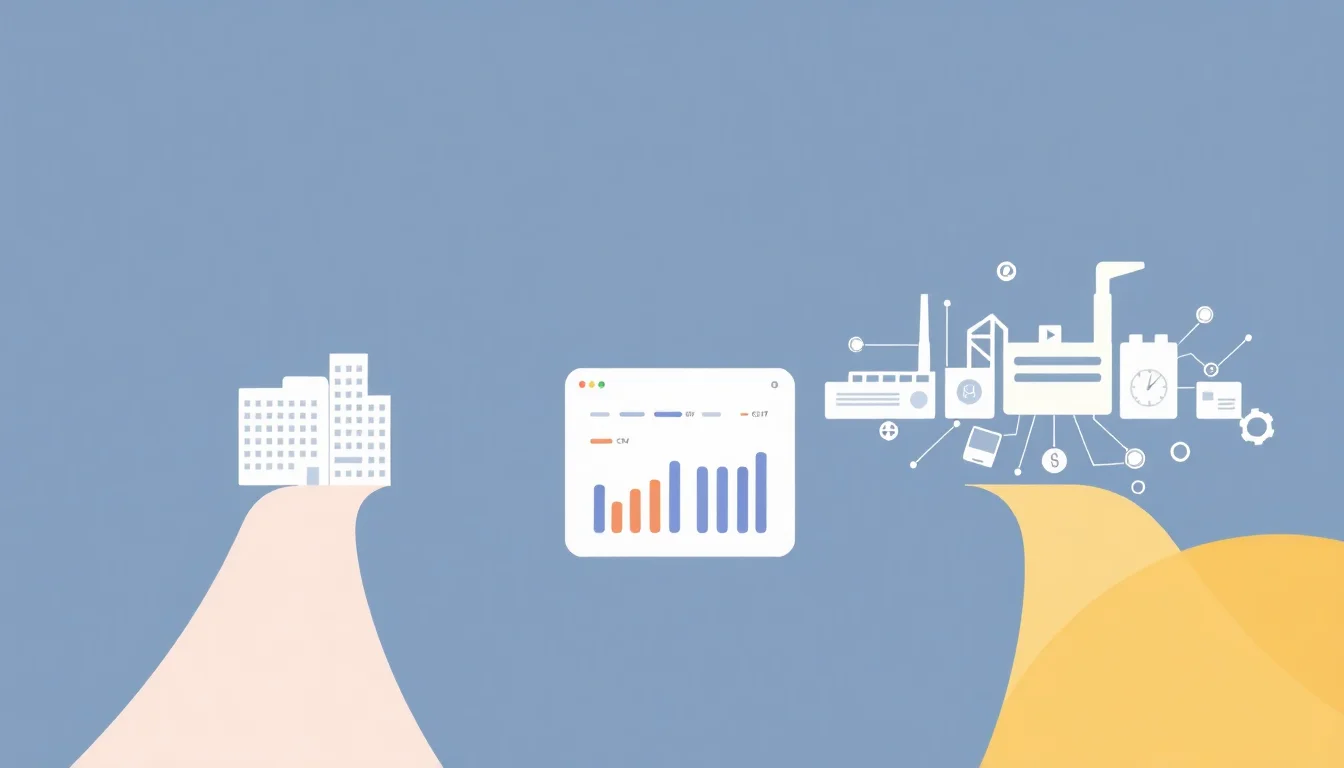
UKG and ADP Workforce Now vs. Purpose-Built Manufacturing Workforce Intelligence: An Honest Comparison
UKG and ADP Workforce Now are robust HR and payroll platforms, but they lack native manufacturing workforce intelligence, meaning they track labor hours without linking them to output, OLE, or cost-per-unit. Purpose-built manufacturing workforce platforms integrate with MES and ERP to turn labor data into operational decisions. For cost reduction and performance visibility, specialized platforms outperform general HR systems.
UKG and ADP Workforce Now are robust HR and payroll platforms, but they lack native manufacturing workforce intelligence, meaning they track labor hours without linking them to output, OLE, or cost-per-unit. Purpose-built manufacturing workforce platforms integrate with MES and ERP to turn labor data into operational decisions. At Elements Connect, we have built our platform specifically to bridge this gap, enabling real-time visibility into labor cost per unit and OLE that general HR systems cannot provide. For cost reduction and performance visibility, specialized platforms outperform general HR systems.
What UKG and ADP Workforce Now Are Actually Built to Do
UKG (formerly Kronos merged with Ultimate Software) and ADP Workforce Now are enterprise HR suites engineered around payroll accuracy, benefits administration, compliance automation, and time-and-attendance tracking. They do these things exceptionally well. Both platforms have decades of compliance infrastructure behind them, and for HR teams managing multi-state payroll, FLSA obligations, or ACA reporting, they are genuinely powerful tools.
Unit labor costs across manufacturing increased at an average rate of 6.1 percent in 2024 (bls.gov). That pressure is real. But knowing your payroll cost as a percentage of headcount is very different from knowing your labor cost per unit produced by shift, line, or work order. That distinction is where UKG and ADP reach their structural limits in manufacturing environments.
Core Features That Make UKG and ADP Strong HR Platforms
Both platforms deliver automated multi-entity payroll, biometric and badge-based time clocks, employee self-service portals, and built-in compliance tooling for labor law across jurisdictions. UKG's strength in complex pay rules, union differentials, multi-state premium calculations, predictive scheduling compliance, is well-documented. ADP Workforce Now handles multi-entity payroll at scale with strong audit trails and regulatory update cadence.
For HR administrators and payroll managers, these capabilities matter. They reduce compliance risk and administrative overhead. The 2025 UKG Manufacturing Trends Report found that 88% of manufacturers say compliance costs impact the bottom line (ukg.com), which helps explain why investment in robust HR platforms remains justified even as operational gaps persist.
UKG Pricing, Implementation, and HR Benchmark Performance
That timeline accounts for configuration, data migration, training, and go-live stabilization. Implementation complexity scales with the number of pay rules, integrations, and facilities involved. For manufacturers with union contracts and multi-site operations, implementations at the longer end of that range are common.
In head-to-head HR platform analyses, UKG frequently scores marginally higher than ADP Workforce Now on scheduling flexibility and workforce management depth. These scores reflect HR functionality, not operational intelligence. The important caveat: both platforms were evaluated against HR criteria. Neither platform was benchmarked on OLE measurement, MES integration, or cost-per-unit calculation, because neither was built for those functions.
Where UKG and ADP Hit a Wall in Manufacturing Contexts
UKG's scheduling module optimizes for coverage, compliance thresholds, and cost guardrails. That works well for retail or healthcare shift management. On a production floor with variable work orders, mixed temp and direct labor, and real-time throughput demands, coverage-based scheduling leaves money on the table.
ADP Workforce Now carries a well-documented rigidity in shift-heavy manufacturing environments. Industry data suggests ADP's scheduling workflows, designed for stable shift patterns, require significant manual workarounds when demand is volatile. Seasonal beauty contract manufacturing, for example, where line configurations change weekly based on brand client orders, stresses ADP's scheduling architecture in ways that vendor documentation rarely acknowledges.
Neither platform natively connects logged labor hours to MES production orders, WMS pick rates, or ERP job costs. Connecting them requires custom API development, data engineering work, and ongoing maintenance. That cost is real, and it rarely appears in total cost of ownership comparisons on review aggregator sites.
What Purpose-Built Manufacturing Workforce Intelligence Platforms Do Differently
Purpose-built platforms start with the production environment, not the HR org chart. Their core architecture ingests industry research, ERP job costs, and WMS throughput simultaneously, mapping labor hours to specific work orders, SKUs, and production lines. The result is labor cost per unit calculated in real time, not reconstructed from payroll exports after the period closes.
This is the core architectural difference. It is not a feature gap. It is a design philosophy gap.
Deloitte's 2025 Smart Manufacturing Survey found that manufacturers implementing smart manufacturing initiatives saw a 7% to 20% improvement in employee productivity and 10% to 15% in unlocked capacity (deloitte.com). Those gains do not come from better payroll processing. They come from connecting labor inputs to operational outputs in ways that general HR platforms structurally cannot.
Connecting Labor Data to Production Outcomes: The Core Architectural Difference
Specialized platforms for manufacturing workforce visibility offer MES integration depth that goes well beyond what HR suites can deliver through standard API connectors. Labor hours are mapped to specific work orders. Supervisors receive real-time alerts when a production line trends toward a labor cost overrun during the active shift. Operator performance histories inform scheduling decisions, routing highest performers to highest-value or most complex work.
This is not theoretical. Consider a beauty contract manufacturer running 12-hour shifts for a major CPG client during a product launch. The plant manager needs to know, at 6 AM, whether the overnight shift hit its cost-per-unit target, not when payroll closes on Friday. A purpose-built workforce intelligence platform surfaces that data on the supervisor's dashboard in real time. UKG and ADP cannot do this without significant external data engineering.
The industry could face a shortage of 1.9 million workers by 2033 (teambridge.com). In that environment, placing your highest-performing operators on your highest-margin work orders is not a nice-to-have. It is a competitive necessity.
Unified Visibility Across Direct and Contingent Workforce
Contingent workforce management is one of the most significant blind spots in manufacturing HR platforms. UKG and ADP manage co-employment risk for temp workers. They do not track temp worker performance against production benchmarks. When a staffing agency delivers 40 workers for a seasonal peak, neither platform can tell you which of those 40 are in the top quartile of productivity.
Purpose-built manufacturing workforce platforms track temp and agency workers alongside direct employees under the same performance framework. Supervisors see apples-to-apples comparisons. Staffing agencies connected to these platforms can provide clients with actual performance evidence, not just headcount coverage. That shift transforms a staffing agency from a cost center into a performance partner.
Head-to-Head Feature Comparison: UKG and ADP vs. Manufacturing Workforce Platforms
The table below reflects an honest category-by-category assessment across the dimensions that plant managers, VPs of Operations, and supply chain directors act on daily.
| Capability | UKG | ADP Workforce Now | Manufacturing Workforce Platform |
|---|---|---|---|
| Multi-state payroll and compliance | Excellent | Excellent | Not designed for this |
| Union and complex pay rule handling | Excellent | Good | Varies by platform |
| Time and attendance | Excellent | Excellent | Good (via integration) |
| HR self-service and benefits admin | Excellent | Excellent | Not designed for this |
| OLE and labor efficiency ratio | Not available | Not available | Core feature |
| Cost-per-unit by work order | Not available | Not available | Core feature |
| Real-time shift-level dashboards | HR-facing only | HR-facing only | Supervisor and ops-facing |
| MES/ERP integration depth | API only, custom build | API only, custom build | Native integration layer |
| Contingent workforce performance | Administrative only | Administrative only | Unified performance framework |
| Demand-driven scheduling | Coverage-based | Coverage-based | Production demand-aligned |
Payroll, Compliance, and HR Administration
UKG and ADP win this category clearly. Both platforms have compliance infrastructure that specialized manufacturing platforms do not attempt to replicate. The right architecture keeps UKG or ADP as the system of record for HR and payroll. A workforce intelligence layer handles operational performance data alongside it. Attempting to run HR functions on a specialized workforce platform alone is the wrong configuration.
UKG's handling of complex pay rules for union environments and multi-state operations is a genuine differentiator over ADP for manufacturers with organized labor agreements. If your facility operates under a CBA with multiple shift differentials and specialty pay classifications, UKG's pay rule engine is meaningfully more flexible.
Production Performance Visibility and OLE Measurement
Purpose-built manufacturing platforms win this category. By a wide margin. UKG and ADP cannot natively calculate Overall Labor Effectiveness, labor efficiency ratio, or labor cost per unit without external data engineering. Manufacturing workforce intelligence platforms surface these metrics in real time, at the shift, line, and facility level, accessible to supervisors during production, not after payroll closes.
The 2025 UKG Manufacturing Trends Report found that 80% of manufacturers reported an increase in productivity after workforce technology adoption (ukg.com). Productivity gains at that scale require operational visibility, which means the manufacturers achieving those gains are almost certainly supplementing their HR platforms with additional operational intelligence tools.
Scheduling Intelligence for Variable Demand
For seasonal beauty contract manufacturing or fluctuating 3PL volume, demand-driven scheduling is a material cost lever. UKG and ADP scheduling optimizes for coverage and compliance. It does not account for production demand signals from ERP, skill-to-task matching at the work order level, or temp labor pool performance history.
Manufacturing workforce platforms align scheduling to actual production targets, prioritize high performers for complex or high-margin work, and generate right-sizing recommendations during demand spikes or valleys. This is the difference between scheduling software and production scheduling intelligence.
Contingent Workforce and Staffing Agency Integration
This category exposes the most significant operational gap in both UKG and ADP for manufacturing contexts. Both platforms treat contingent labor as an administrative matter. Co-employment risk management is present. Performance visibility is not. A workforce intelligence platform that tracks both direct employees and temp labor performance under the same framework gives operations leaders a unified view that has simply never been available through HR suite architecture.
How to Decide Which Platform Configuration Is Right for Your Operation
The decision is not either/or. The question is whether to add a workforce intelligence layer, not whether to rip and replace payroll infrastructure.
Run this diagnostic. Can you currently calculate labor cost per unit by shift, by line, or by work order without an Excel export? Do production supervisors have real-time performance data during their shift? Can you compare temp worker performance against direct employee benchmarks under the same measurement framework? When demand spikes, can your scheduling system recommend right-sized staffing levels based on actual production targets?
If you answered no to two or more of these, you have a workforce intelligence gap that UKG and ADP were not designed to fill.
Implementation Considerations for Peak Production Environments
A common objection is that implementation will be disruptive during peak production. Purpose-built platforms designed for manufacturing environments should offer phased rollouts starting with one facility or one shift. Pilot programs on a single production line can demonstrate ROI within 60–90 days before full rollout.
Data readiness is a real consideration. If ERP and MES data is messy or siloed, address integration architecture before committing to platform selection. The good news: implementation timelines for manufacturing workforce intelligence platforms are typically shorter than full HR suite implementations, because they are not replacing payroll infrastructure. Scope is narrower. Go-live can happen faster.
At Elements Connect, we have seen manufacturers move from initial scoping to live operational dashboards in under 90 days when ERP and MES data pipelines are reasonably clean. Our team has found that supervisor adoption accelerates significantly when platforms are designed for operations leaders rather than HR administrators, directly impacting the speed and quality of floor-level performance improvements. Floor-level adoption depends on supervisor-facing UX. Platforms built for operations leaders, not HR administrators, consistently see higher adoption on the production floor.
The Business Case for Adding Manufacturing Workforce Intelligence to Your Existing HR Stack
Labor cost pressure is structural. Unit labor costs increased in 20 of 21 three-digit NAICS manufacturing industries in 2024 (bls.gov). That trend does not reverse without deliberate operational intervention. Better payroll processing does not move that number. Connecting labor inputs to production outputs does.
The ROI case rests on three levers: labor cost reduction, throughput improvement, and staffing ROI proof. Improving labor efficiency by 10–15% has a material margin impact (deloitte.com) (deloitte.com). For a facility with $5M in annual direct labor spend, a 10% improvement in OLE produces $500K in recoverable labor cost (deloitte.com) (deloitte.com). That is a concrete ROI anchor for investment justification.
Deloitte found that 78% of manufacturers allocate more than 20% of their overall improvement budget toward smart manufacturing initiatives (deloitte.com). Operations leaders own these initiatives: 51% of respondents reported that smart manufacturing programs are owned and driven by operations, not IT or HR (deloitte.com).
Reduced overstaffing during demand valleys is often the fastest-returning benefit for 3PLs managing seasonal volatility. Retaining one major manufacturing client that would otherwise churn due to poor performance transparency typically exceeds the full annual cost of a workforce intelligence platform. Results speak for themselves.
The 2025 UKG Manufacturing Trends Report found that 46% of manufacturers report increased turnover (ukg.com). Turnover reduction through performance-based retention and better operator engagement is a secondary but significant ROI driver in labor-tight markets. You cannot build a performance-based retention program without performance data. That data lives in a workforce intelligence platform, not a payroll system.
Frequently Asked Questions
Can UKG or ADP Workforce Now calculate cost-per-unit produced without custom development?
Do I need to replace UKG or ADP to add manufacturing workforce intelligence to my operation?
How does a manufacturing workforce platform integrate with my existing MES and ERP systems?
What is Overall Labor Effectiveness (OLE) and why don't standard HR platforms measure it?
How do staffing agencies benefit from manufacturing workforce intelligence platforms?
How long does it take to implement a workforce intelligence platform without disrupting production?
Can a manufacturing workforce platform track both direct employees and temp workers from staffing agencies under the same performance framework?
What ROI should I expect from adding workforce intelligence to my manufacturing operation?
Is workforce intelligence relevant for 3PL and logistics operations, or just discrete manufacturing?
Sources & References
- 2025 UKG Manufacturing Trends Report (opens in a new tab)[industry]
- Modern Approaches to Manufacturing Workforce Management — TeamBridge (opens in a new tab)[industry]
- BLS Productivity and Costs by Industry: Manufacturing and Mining (opens in a new tab)[gov]
- 2025 Smart Manufacturing Survey — Deloitte Insights (opens in a new tab)[industry]
About the Author
Elements Connect
Elements Connect is a workforce intelligence platform helping beauty contract manufacturers, 3PLs, and staffing agencies transform disconnected labor data into actionable insights that reduce costs and elevate operational performance.
Learn more at elementsconnect.com → (opens in a new tab)Related Posts

How Staffing Agencies Can Build a Proprietary Talent Quality Score Clients Can't Get Anywhere Else
Most staffing agencies compete on price and speed—but neither creates lasting client loyalty. A proprietary Talent Quality Score built from real performance data changes the conversation entirely. Here's the step-by-step framework for building one your clients can't find anywhere else.
10 min read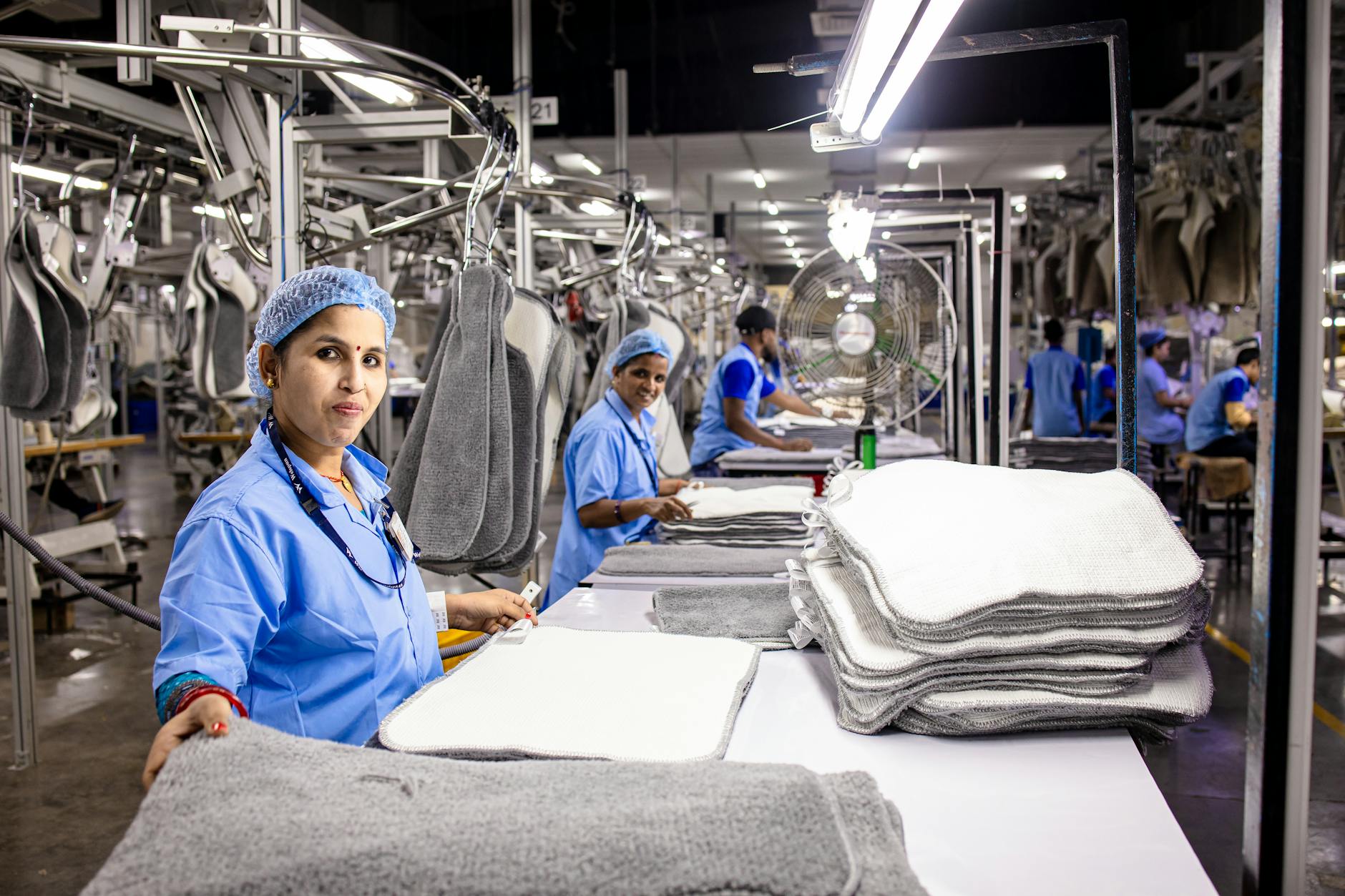
Your Best Operators Are Carrying Your Worst Ones: How to Use Per-Worker Performance Data to Fix Line Imbalance
When your fastest operators compensate for your slowest ones, line imbalance becomes invisible—until it shows up in your labor cost per unit. This guide shows plant managers and operations leaders how to use per-worker performance data to surface hidden imbalance, reassign talent strategically, and build a continuous improvement culture that scales.
15 min read
Why Display Manufacturers Keep Getting Labor Wrong (It's Not What You Think)
Display manufacturers consistently mismanage labor for one structural reason: every tool they have was built for a different kind of factory.
4 min read